Facebook and a website, side by side
| The job | Facebook page | Website |
|---|---|---|
| Current news | Recent grooms, news and updates. | Lasting service information, with updates where relevant. |
| Finding information | Keep key details visible on your page; old posts may take more effort to find. | Give services, location and contact details clear places in the menu. |
| Enquiries | Messages need to be monitored by someone. | Forms, calls or booking links also need a clear owner. |
| Control and upkeep | Access and features depend on the platform and your account. | Access depends on domain, hosting and provider arrangements; check your contract. |
| Cost | Consider time spent maintaining the page and any paid promotion you choose. | Consider build, renewal, hosting, subscriptions and ongoing updates. |
Give each channel a clear job
A Facebook post is useful for sharing a recent groom, an update or a change to availability. A website is useful for information you want owners to find without working through old posts: services, location, your approach and how appointments work.
Avoid copying every post onto a website or trying to fit your whole service explanation into a social biography. Match the information to the job it needs to do.
Put lasting information somewhere easy to find
Imagine a new owner checking whether you groom puppies, hand strip or work with nervous dogs. They should not have to piece the answer together from several photographs and comments.
On your website, organise this around the questions people ask. On Facebook, make the business details and website link easy to find. For a mobile service, keep the travel area clear on both; for a salon, check the location and contact details match.
Choose how you want enquiries to arrive
If you check Facebook messages only at certain times, do not make them your only contact option without explaining your actual arrangements. Equally, do not add a website form that nobody will monitor.
Decide whether new owners should call, send an enquiry or go to your booking system. Link your social page to that next step. Ask only for the details you need to assess the enquiry, rather than creating a long application for a simple question.
Use real work to build confidence
Share photographs that represent your grooming and that you have permission to use. Your website can put those images alongside an explanation of your handling, services and experience; social posts can show what is happening now.
Do not imply that a photograph proves a guaranteed outcome for every dog. Coat condition, temperament and the agreed service all matter. Clear expectations are more useful than exaggerated promises.
Keep access and updates under control
Use accounts you can access and keep track of who manages them. Your website still depends on its domain, hosting and provider arrangements, so ask what you control and what happens if you leave.
When you change a service, price or contact detail, update both places. A simple list of where your business information appears can prevent old details being left behind.
- Check your opening or appointment information.
- Check the location or service area.
- Check prices and service descriptions wherever displayed.
- Test the website link and the booking or enquiry journey.
- Confirm someone is checking each contact channel you offer.
A practical starting point
Keep using Facebook if it works for your business. Add a website when you need a clearer home for your information, and connect the two deliberately.
The question is not which channel has the most features. It is whether an owner can understand your business and take the next step without confusion.
A real grooming business example
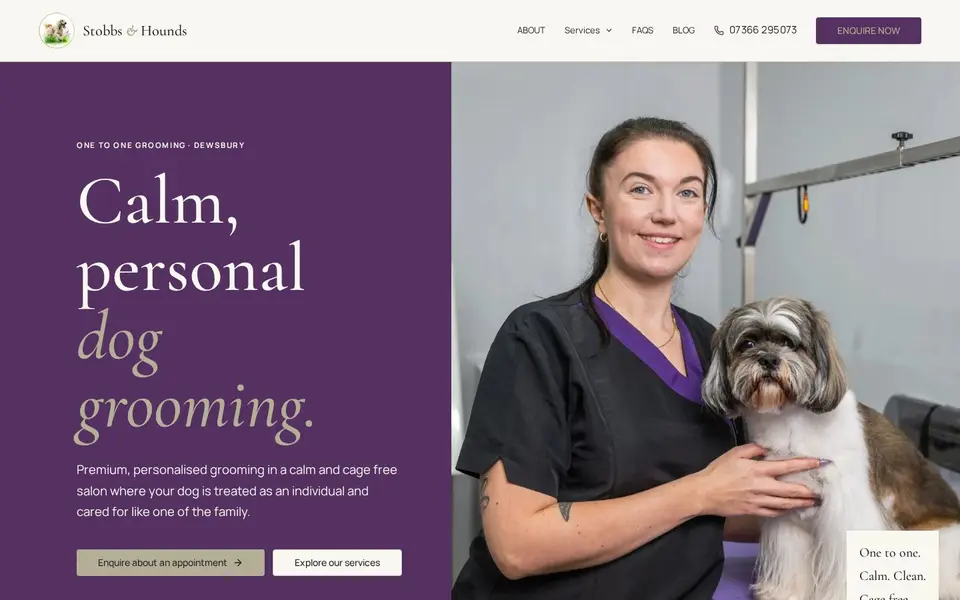
Stobbs & Hounds is a calm, cage-free one-to-one grooming salon in Dewsbury. Explaining that appointment experience is a lasting website task; a recent grooming photograph or availability update can serve a different purpose on social media.
See more real pet business websitesThinking about the next step? See how we build websites around your grooming business. We start with your services, customers and goals.